You’ve spent six months planning the trip. You got up at 7:00 AM. You’ve power-walked, dragging two half-asleep kids to the entrance of Crush’s Coaster. And there it is: a smiling Cast Member and a sign that says “Temporarily Closed”.
That feeling of frustration is 100% legitimate. You want to scream.
But as a park expert, I’m going to tell you something that goes against everything you’ve read on complaint forums: that sign isn’t a tragedy. It’s a tactical advantage.
Disneyland Paris is a hyper-complex mechanical city that’s been operating since 1992. Every animatronic, every laser sensor, and every hydraulic pump has its limits. Disney would rather stop a ride than have you see Elsa stutter or a car jerk.
The difference between the tourist who ruins their morning complaining about the closure and the expert visitor who triumphs is how they react in the 5 minutes after seeing that sign. Here’s the ultimate guide to turning closures and breakdowns into your best weapon.
📅 Scheduled Closure vs. Technical Breakdown: Know Your Enemy
There are two types of closures at Disney, and treating them the same is a rookie mistake.
1. Scheduled Closure (The Necessary Evil)
These are full refurbishments. Disney is constantly updating and adding magic, so some rides enter long-term renovation periods. For example, Ratatouille closed for five full months (October 2025 to March 2026) to get tuned up, and Crush’s Coaster has a massive closure scheduled from September 2026 through summer 2027.
- The Strategy: this is predictable. The refurbishment schedule is on the official website. If you’re travelling and your favourite ride is on the blacklist, change your dates or start the acceptance process. That’s all there is.
2. Technical Closure (The Day’s “Breakdown”)
This is the one that hurts. It’s the ride that was working an hour ago and is now closed without warning. It happens constantly on high-tech rides (like Frozen Ever After, Spider-Man W.E.B. Adventure, or Big Thunder Mountain).
- The Strategy: this is where 90% of people get it wrong. They stand at the entrance, waiting to see if it reopens, losing vital morning time. The expert doesn’t wait; the expert pivots.
🏃♂️ The 5-Minute Rule: What to Do When You Hit a Breakdown
You’ve just found Frozen Ever After closed due to a technical fault. Here’s the protocol to avoid losing your day:
1. Don’t ask “how long will it take” The Cast Member at the gate will tell you “they don’t know.” And it’s true, they don’t. It could be a system reboot (20 minutes) or a broken water pump (4 hours). Wasting time interrogating staff is useless.
2. Execute the Immediate Plan B If Frozen is closed, what’s a two-minute walk away? The Olaf animatronic show, or the character meet at the Castle. If Crush’s Coaster breaks, cross the street and hop into Ratatouille or Slinky Dog. Never walk to the other end of the park if your Plan A fails. Exploit the zone you’re already in.
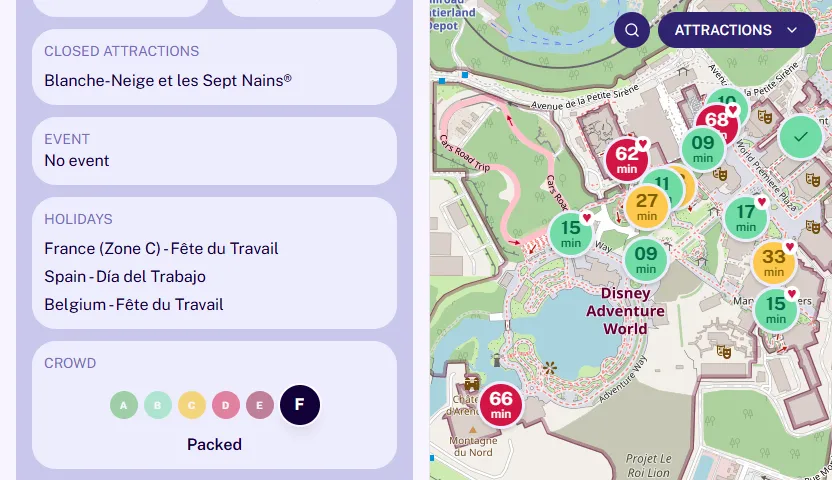
3. Activate Your “Radar” This is where MagicWait Paris saves your life. Don’t walk 15 minutes from Avengers Campus to World of Frozen only to discover it’s closed. Open the app before you move. If it says “Closed”, you’ve just saved yourself half an hour of pointless walking.
🎯 Don’t walk blind through the park. With Magic Wait Paris you can see in real time which rides are open, which are closed, and which have just reopened. Try it free.
📈 The “Dam Burst Effect”: How to Exploit the Reopening
Here comes this article’s most valuable “Hack.”
When a super-popular ride (like Big Thunder Mountain or Frozen) breaks down for two hours, a dam effect is created. Everyone who had purchased Premier Access or been assigned a Priority Card hasn’t been able to ride.
When the ride finally reopens, this happens:
- The First 10 Minutes of Chaos: a human tide rushes toward the entrance.
- The Premier Access Bottleneck: Disney gives absolute priority to everyone who paid and couldn’t ride during the previous two hours. The regular queue freezes.
The winning strategy: if you see on MagicWait that Frozen has just reopened after a long breakdown, DO NOT RUN. The regular queue won’t move because they’ll be absorbing the delayed VIPs. Wait about 45-60 minutes after the reopening. The system will have cleared, the initial anxious crowd will have passed, and you’ll enter when the flow returns to normal.
⚠️ The “Blacklist”: Rides That Break Down the Most in 2026
If you’re planning your day, assume these rides will give you a scare at some point. Always have a Plan B ready for them:
🏔️ 1. Big Thunder Mountain: The “Crystal King”
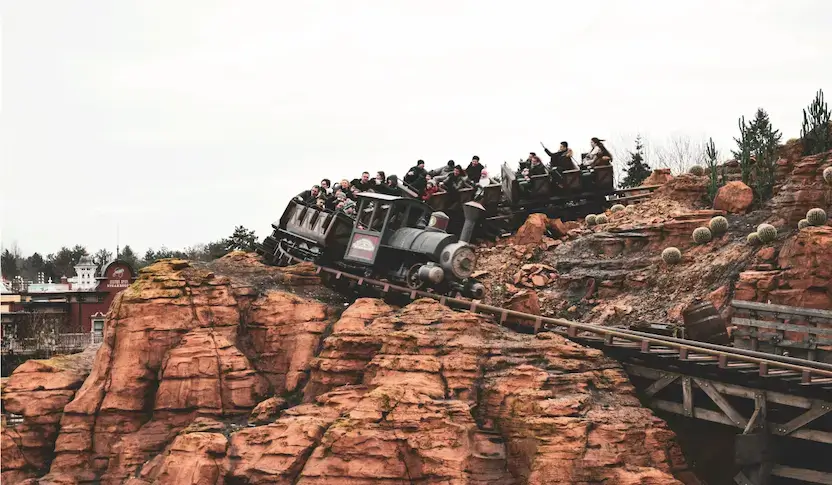
It’s the best mine train roller coaster in all Disney parks worldwide, but it suffers from a geographic problem unique to Paris: it’s built on an island in the middle of a lake.
And that complicates absolutely everything.
Why does it stop so often? The roller coaster’s safety system is packed with laser sensors. If a visitor’s cap flies off, their Minnie ears fall, or their phone slips out (a daily occurrence) and the object lands on the track, the laser trips and the computer slams every train to a halt for safety (what Disney jargon calls a “Code 101”).
On a normal roller coaster, a technician walks to the track, removes the cap, and reboots the system in 5 minutes. In Paris, the technician has to take a motorboat, cross the lake, climb onto the island, find the cap, get back in the boat, and return. What was going to be a 5-minute stop just became a 45-minute closure.
🚀 2. Star Wars Hyperspace Mountain: The “Failed Launch”
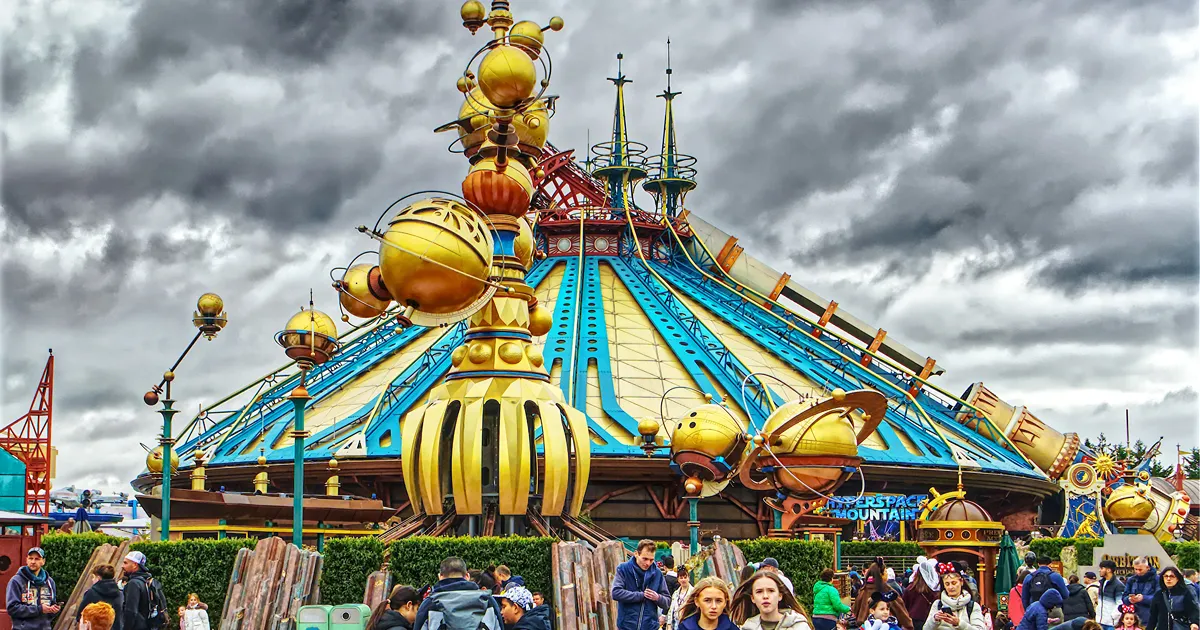
The space coaster’s cannon blasts you at over 70 km/h in a straight line upwards. To achieve this, it doesn’t use traditional chains; it uses a system of high-tech electromagnetic catapults and brakes.
Why does it stop so often? It’s an extremely temperamental machine. If it’s too hot, if a track sensor detects a millimetric vibration out of the ordinary, or simply if a visitor takes too long buckling their harness at the station and delays the train’s departure, the computer preemptively collapses. Resetting a roller coaster in complete darkness requires evacuating the people who’ve been stranded mid-ride by turning on the work lights. And that takes time.
🏴☠️ 3. Pirates of the Caribbean: The “Maritime Traffic Jam”
You’re in your boat, watching the pirates sing, and suddenly your boat bumps into the one ahead and you’re stuck mid-scene for 10 minutes listening to “Yo-Ho, Yo-Ho” on infinite loop.
The myth says “an animatronic broke.” The truth is it’s almost always the public’s fault.
Why does it stop so often? The boats travel propelled by water current, but the entire route is riddled with infrared cameras. If a teenager decides to stand up to film a TikTok, or someone sticks their arm outside the boat, the safety system detects it as a possible “man overboard” and cuts the water pumps instantly. Other times, it’s pure logistics: someone in the unloading zone takes too long getting out of their boat, and the boats behind start piling up and bumping into each other in a chain reaction.
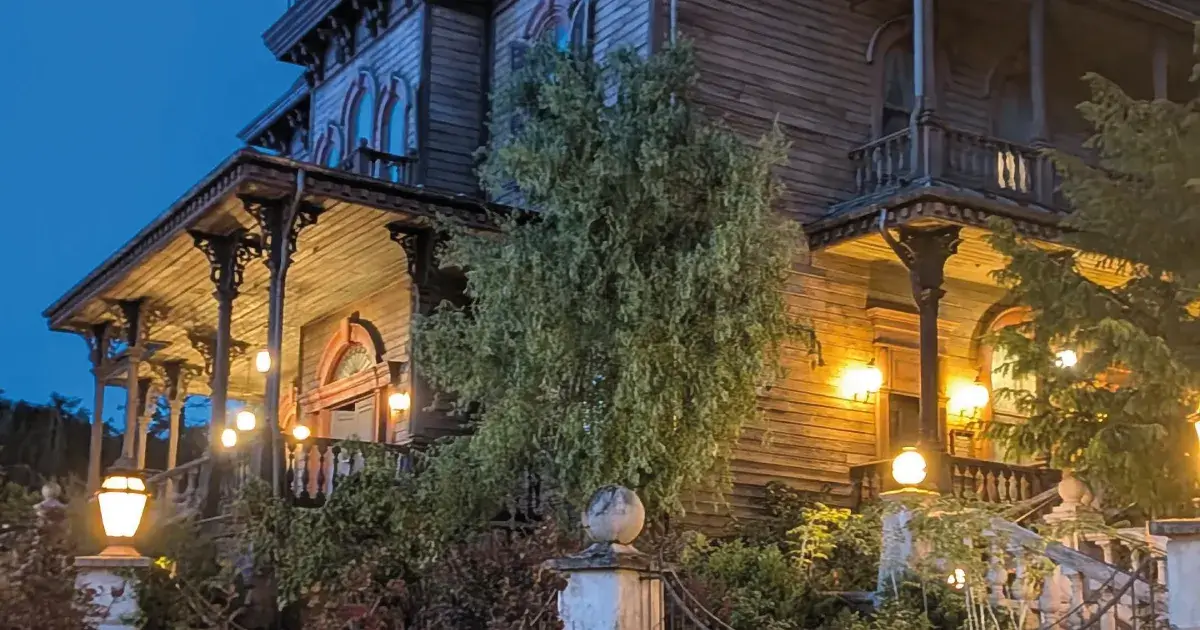
👻 4. Phantom Manor: The “False Breakdown”
Here comes the most important mental hack in this article. You’re in your black buggy (Doom Buggy), about to see the ghostly Bride, and the ride comes to a complete stop. You’re in the dark for 3 minutes. Your first thought is: “Great, it’s broken.”
Wrong! It’s not a breakdown. Phantom Manor (just like Buzz Lightyear Laser Blast) uses an Omnimover system. That means the buggies are an endless chain that never stops at the station; you have to board while it’s moving. When the ride stops, 99% of the time it’s because Cast Members have stopped the entire chain from the control panel to allow someone in a wheelchair or with reduced mobility to safely board or exit their buggy at the loading station. Breathe. There’s no need to pull out your phone; in a minute or two the chain will start moving again on its own.
❄️ 5. Frozen Ever After: The New Software’s “Tantrum”
It’s the undisputed star of 2026, but its technology is so advanced it errs on the side of hypersensitivity.
Why does it stop so often? It uses 100% electric A-1000 series animatronics and boats guided by aquatic sensors. If a boat creates a bigger splash than normal, or if a sensor misreads the weight on the backward drop, the computer panics and freezes (pun intended) the ride. Being so new, it requires 15-30 minute “micro-stops” almost daily to recalibrate the systems.
🐢 6. Crush’s Coaster: The Mathematical Madness
The historic headache of the Studios park. The massive queues are compounded by its continuous stoppages.
Why does it stop so often? It’s a pure physics problem. The shells spin freely depending on the weight distribution of the 4 passengers. If one shell is very unbalanced and takes a millisecond longer to pass the next braking sensor (Block Zone), the entire roller coaster locks down automatically to prevent collisions. And rebooting Crush’s Coaster isn’t pressing a button; it requires tedious visual inspections.
🕷️ 7. Spider-Man W.E.B. Adventure: The “Blue Screen”
It’s basically the biggest, most expensive video game in the world, and like any electronic device, sometimes it needs turning off and on again.
Why does it stop so often? The 3D cameras read the arm movements of dozens of people per second. When there are desynchronisations on the giant screens or glitches in the score counting, the system has to reboot. They’re usually short breakdowns, but frustrating.
🧠 The Mindset Shift: From “Victim” to “Strategist”
The average tourist panics when their plan goes sideways. The expert visitor knows the park is a living entity.
A technical closure on Spider-Man means hundreds of people have just been evacuated onto the street, suddenly filling the Avengers Campus area. What does the expert do? They walk away from there and head to Ratatouille, which right now will be emptier because the crowd is distracted by the breakdown.
Every breakdown creates a void somewhere else in the park.
🎯 Become your family’s strategist. Don’t let a breakdown ruin your trip. With Magic Wait Paris you can see in real time which rides have just closed and which have just reopened, letting you move against the chaos. Try it free.